Weekly Meal Plan with a Grocery List

Joanna Sirak · 5 min read
Joanna Sirak · 5 min read
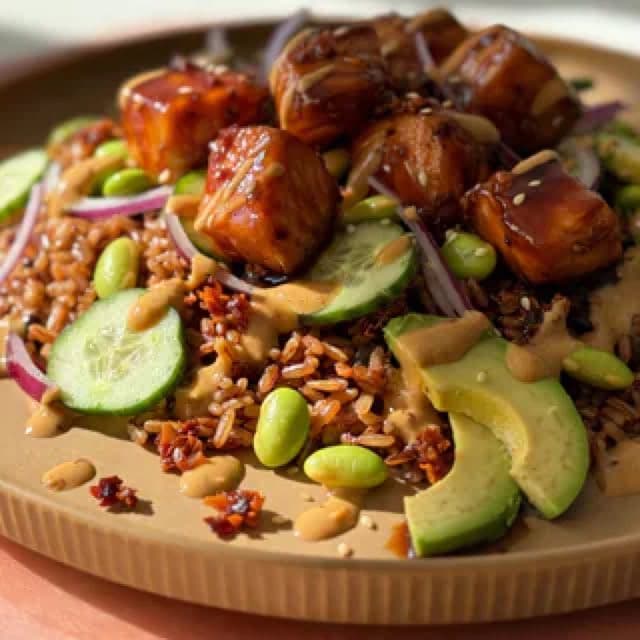
A weekly meal plan with a grocery list that keeps you full starts with protein: each of your three main meals gets a portion of meat, fish, eggs, dairy or pulses, and only then do you add vegetables and carbs. You write the grocery list once, for the whole week, rather than every day from memory.
That's all the theory. Below I show the method I use myself and explain why most “weight loss meal plans” you find online leave you hungry after two days.
Protein, fibre and fat in every meal, in that order of importance. Protein keeps you full the longest of the three macronutrients, and it's the building material for the muscles you work for in training. Fibre from vegetables, fruit and whole grains fills your stomach and slows digestion. Fat from olive oil, nuts, avocado or oily fish makes a meal taste good, so you're not thinking about food an hour later.
A typical hungry meal plan looks like this: porridge made with water for breakfast, lettuce and tomato for lunch, a yoghurt for dinner. Few calories, almost no protein, no fat. Your body reads this as a time to save energy, and two days later it sends you to the biscuit cupboard. Not for lack of willpower. For lack of protein.
For an active person who does strength training, general guidelines for adults suggest 1.2-1.6 g of protein per kilogram of body weight a day. At 70 kg that's about 85-110 g. Spread over three meals, it comes to 25-35 g in each, plus a snack if you want one. You don't have to count it to the gram; it's enough to know what a portion looks like.
| Protein source | Portion | Protein (approx.) |
|---|---|---|
| Chicken breast, raw | 150 g | 33 g |
| Salmon, raw | 150 g | 30 g |
| Eggs | 3 | 19 g |
| Plain skyr | 200 g | 20 g |
| Twaróg (Polish curd cheese), semi-skimmed | 150 g | 27 g |
| Red lentils, dry | 80 g | 19 g |
| Firm tofu | 150 g | 20 g |
| Tinned chickpeas, drained | 200 g | 14 g |
The values are approximate and depend on the product; check the labels. If you have kidney disease or another chronic condition, or you're pregnant, ask your doctor or a dietitian how much protein is right for you.
One where you repeat meals. This is the most important rule and the one most often ignored. Seven different breakfasts, seven lunches and seven dinners make 21 recipes, 21 ingredient lists and a kitchen full of leftovers. Three breakfasts, four lunches and three dinners, rotated through the week, make a week you can sort out in one Saturday.
My weekly method, a simple 3-4-3 meal prep plan:
Step five is the one people skip, and then they're at the shop every day, and every day they buy something they hadn't planned.
Everything the meals you planned need for the whole week, and nothing else. Add up ingredients by product, not by recipe. If the omelette needs 3 eggs and the scrambled eggs need 2, your list says 5 eggs times the number of days, not two separate “eggs” entries. Then order the list the way you walk around the shop: fruit and vegetables, meat and fish, dairy and eggs, bread, dry goods and tins, spices, frozen food.
Things you always have (salt, olive oil, pepper, garlic) go in a separate section at the bottom, and you only check they aren't running out. Things you use once a week in small amounts (fresh herbs, a lemon) should go into two recipes, so you don't throw half a bunch away.
On paper this takes an hour, and it's an hour well spent. On the Fresh Start Meal Plan platform, that hour disappears: you choose your days and the list builds itself from what you planned, sorted by shop section, ready to tick off on your phone.
Keep two emergency meals you can make in 10 minutes from what's always at home: eggs with bread and tomato, or tinned tuna with chickpeas and olive oil. They don't have to be perfect; they have to have protein. One emergency meal doesn't ruin a week. What ruins a week is deciding that because one thing went wrong, the rest no longer matters.
In the Fresh Start Meal Plan, the recipes are arranged into a ready-made week, every dish shows its calories and macronutrients, and the grocery list is built from the days you choose. The ebook is yours to keep as a PDF, and the platform works on your phone in the kitchen and in the shop. If you'd rather start with training first, the free Strength Start workout plan is below.
The recipes and tips in this post are general and educational. Calories and protein are estimates. If you have a health condition, take medication, have allergies or intolerances, or are pregnant or breastfeeding, talk to a specialist before changing the way you eat.
How many calories do you need each day? Check with the free calorie calculator.